古岘镇大朱毛村Guxianzhendazhumao Cun (Village)
山东 · 青岛 · 平度市Shandong, Qingdao, Pingdushi
- Province
- 山东Shandong
- City
- 青岛Qingdao
- County
- 平度市Pingdushi
- Lat / Long
- 36.700933, 120.267161
- Location details
- —
- ID
- SD_0085
- Permalink
- /sites/SD_0085
- Site type
- 不明Unknown
- Period
- 战国Warring States
- Find records
- 1
- Total coins
- 1
Description
—古岘镇大朱毛村出土单位
Guxianzhendazhumao Cun (Village) Excavation Unit
Code: SD_0085_CTX001
State: 不明Unknown
Period: 战国Warring States
Coins: 1
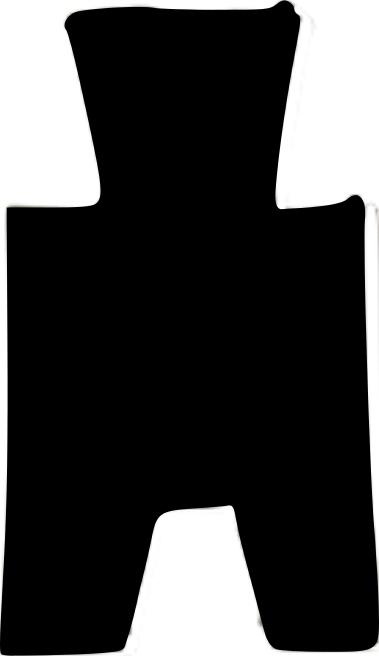
不明,新华书店干部李中茂在古岘镇下乡时候从农民家中发现,莒农民所说在即墨故城内大朱毛村附近发现。刀身从范面上可以隐约看到刻痕。根据调查,故城分为内、外两城。外城平面略呈长方形,南北长约5千米,东西宽约2.5千米,总面积约12.5平方千米。西墙与南墙西段已夷平,北城垣尚留有残迹,残高约1米。东城垣和南墙东段尚存1500米,墙基宽约30~40米,残高3~4米,夯土板筑。因未勘探、发掘,城门数量不详,仅知南墙东段有一宽约7.5米的缺口,疑为城门。 内城位于外城东南角,东墙与南墙和大城城墙重合,西、北城垣皆已夷平,钻探中曾发现多处建筑遗迹。外城东墙外为小沽河。城内文化堆积厚约1~1.5米。 采集的遗物:东周时期有泥质灰陶罐、豆盘、树木卷云纹半瓦当、齐刀币、燕刀币、铜弩机、剑、戈、鼎;汉代有泥质灰陶几何纹方砖、卷云纹瓦当、空心画像砖及铜鈁、铜五铢钱范、“半两”钱范等。 清《重修平度县志》载:“齐初并莱,以莱古都辽远,建此城于莱国之中,北依群峯,南控齐、莒,名朱毛城,后为即墨。” 《山东通志·古迹》载:“即墨县故城在州东南六十里,战国齐邑,汉置县,属齐国。文帝十六年(公元前164年)封悼惠王子白石侯熊渠为胶东王,都即墨,又名朱毛城,亦曰康王城。” 《史记》载:“齐田单以即墨破燕,杀骑劫”,即指此。东汉后为即墨县治,隋开皇十六年(596年)废弃。
Unclear. Found by Xinhua Bookstore staff member Li Zhongmao in a farmer's home while working in Guxian Zhen; local farmers said it came from near Dazhumao Cun within the ancient city of Jimo. Carving marks are faintly visible on the mould face. Survey shows the ancient city has inner and outer walls: the outer city is roughly rectangular, about 5 km north-south by 2.5 km east-west (c. 12.5 sq km total); the west wall and west section of the south wall have been leveled, the north wall survives to about 1 m, and the east wall and east section of the south wall survive for 1,500 m, with a rammed-earth base 30-40 m wide and 3-4 m high; gate locations are unconfirmed for lack of excavation, though a roughly 7.5 m gap in the east section of the south wall may be a gate. The inner city sits in the outer city's southeast corner, its east and south walls coinciding with the outer wall; its west and north walls have been leveled, though building remains have been found by drilling. The Xiaogu River runs outside the outer city's east wall. Cultural deposits within the city are about 1-1.5 m thick. Collected finds include, from the Eastern Zhou: clay gray-ware jars, dou dishes and plates, semicircular eave tiles with cloud-and-tree motifs, Qi and Yan knife coins, bronze crossbow triggers, swords, ge-halberds, ding-tripods; from the Han: clay gray-ware geometric-patterned square bricks, cloud-motif eave tiles, hollow pictorial bricks, bronze fang-vessels, bronze Wuzhu coin moulds, and "Ban Liang" coin moulds. The Qing-dynasty Revised Pingdu County Gazetteer records: "When Qi first annexed Lai, since Lai's old capital was remote, this city was built within the former state of Lai, backed by mountains to the north and commanding Qi and Ju to the south; named Zhumao City, later Jimo." The Shandong Tongzhi (Gazetteer of Shandong), Ancient Sites section records: "The ancient city of Jimo County lies 60 li southeast of the prefecture, a Qi settlement in the Warring States period, made a county under the Han and attached to the Kingdom of Qi. In the sixteenth year of Emperor Wen [164 BCE], Xiong Qu, Marquis of Baishi and son of King Daohui, was enfeoffed as King of Jiaodong with his capital at Jimo, also called Zhumao City or Kangwang City." The Shiji records "Qi's Tian Dan broke the Yan siege at Jimo and killed Qi Jie," referring to this place. It served as the seat of Jimo County after the Eastern Han, and was abandoned in the sixteenth year of the Kaihuang era of the Sui [596 CE].
不明,新华书店干部李中茂在古岘镇下乡时候从农民家中发现,莒农民所说在即墨故城内大朱毛村附近发现。刀身从范面上可以隐约看到刻痕。根据调查,故城分为内、外两城。外城平面略呈长方形,南北长约5千米,东西宽约2.5千米,总面积约12.5平方千米。西墙与南墙西段已夷平,北城垣尚留有残迹,残高约1米。东城垣和南墙东段尚存1500米,墙基宽约30~40米,残高3~4米,夯土板筑。因未勘探、发掘,城门数量不详,仅知南墙东段有一宽约7.5米的缺口,疑为城门。 内城位于外城东南角,东墙与南墙和大城城墙重合,西、北城垣皆已夷平,钻探中曾发现多处建筑遗迹。外城东墙外为小沽河。城内文化堆积厚约1~1.5米。 采集的遗物:东周时期有泥质灰陶罐、豆盘、树木卷云纹半瓦当、齐刀币、燕刀币、铜弩机、剑、戈、鼎;汉代有泥质灰陶几何纹方砖、卷云纹瓦当、空心画像砖及铜鈁、铜五铢钱范、“半两”钱范等。 清《重修平度县志》载:“齐初并莱,以莱古都辽远,建此城于莱国之中,北依群峯,南控齐、莒,名朱毛城,后为即墨。” 《山东通志·古迹》载:“即墨县故城在州东南六十里,战国齐邑,汉置县,属齐国。文帝十六年(公元前164年)封悼惠王子白石侯熊渠为胶东王,都即墨,又名朱毛城,亦曰康王城。” 《史记》载:“齐田单以即墨破燕,杀骑劫”,即指此。东汉后为即墨县治,隋开皇十六年(596年)废弃。
Unclear. Found by Xinhua Bookstore staff member Li Zhongmao in a farmer's home while working in Guxian Zhen; local farmers said it came from near Dazhumao Cun within the ancient city of Jimo. Carving marks are faintly visible on the mould face. Survey shows the ancient city has inner and outer walls: the outer city is roughly rectangular, about 5 km north-south by 2.5 km east-west (c. 12.5 sq km total); the west wall and west section of the south wall have been leveled, the north wall survives to about 1 m, and the east wall and east section of the south wall survive for 1,500 m, with a rammed-earth base 30-40 m wide and 3-4 m high; gate locations are unconfirmed for lack of excavation, though a roughly 7.5 m gap in the east section of the south wall may be a gate. The inner city sits in the outer city's southeast corner, its east and south walls coinciding with the outer wall; its west and north walls have been leveled, though building remains have been found by drilling. The Xiaogu River runs outside the outer city's east wall. Cultural deposits within the city are about 1-1.5 m thick. Collected finds include, from the Eastern Zhou: clay gray-ware jars, dou dishes and plates, semicircular eave tiles with cloud-and-tree motifs, Qi and Yan knife coins, bronze crossbow triggers, swords, ge-halberds, ding-tripods; from the Han: clay gray-ware geometric-patterned square bricks, cloud-motif eave tiles, hollow pictorial bricks, bronze fang-vessels, bronze Wuzhu coin moulds, and "Ban Liang" coin moulds. The Qing-dynasty Revised Pingdu County Gazetteer records: "When Qi first annexed Lai, since Lai's old capital was remote, this city was built within the former state of Lai, backed by mountains to the north and commanding Qi and Ju to the south; named Zhumao City, later Jimo." The Shandong Tongzhi (Gazetteer of Shandong), Ancient Sites section records: "The ancient city of Jimo County lies 60 li southeast of the prefecture, a Qi settlement in the Warring States period, made a county under the Han and attached to the Kingdom of Qi. In the sixteenth year of Emperor Wen [164 BCE], Xiong Qu, Marquis of Baishi and son of King Daohui, was enfeoffed as King of Jiaodong with his capital at Jimo, also called Zhumao City or Kangwang City." The Shiji records "Qi's Tian Dan broke the Yan siege at Jimo and killed Qi Jie," referring to this place. It served as the seat of Jimo County after the Eastern Han, and was abandoned in the sixteenth year of the Kaihuang era of the Sui [596 CE].
币种构成 / Coin types
- 明刀范Ming Knife Mould1 · 100%